
Commercial insulation in Yuma AZ - metal roofs and walls that keep the heat out
Shop hot by noon, sweat on the steel or noise bouncing around? We insulate metal roofs and walls so the building runs cooler and quieter.
- Fully licensed and insured.
- Free estimates at your property.
- We respond within 1 business day.
What does commercial insulation do for a metal building in Yuma?
Commercial insulation in Yuma goes into the roof and exterior walls of metal buildings and commercial roofs, where it slows the heat moving through the building, so the space is easier to keep comfortable and uses less energy doing it.
The business owners who call us usually have a metal shop, warehouse or office with a hot roof overhead, or a re-roof coming up and a question about what should go under it. The price moves with how much roof and wall there is, the type of roof, what's up there now and whether it has to come out, and whether fiberglass or foam suits the building. The schedule turns on whether a permit and inspections are needed, whether a roofer is working at the same time and whether the building has to stay open while we work. Leaks come first, and gaps the insulation would otherwise fight usually need air sealing before anything new goes in, so I look for both. You get the figure for your building from the estimate after I've walked it.
How we handle commercial insulation
I start by walking the building myself and looking hard at the roof, because insulation laid over a leak or a wet deck is money wasted, and I'd rather tell you about a problem than cover it up. Then we plan the system for how the finished roof or wall will perform, not the number printed on the roll, and we settle how the vapor retarder, the facing that keeps damp inside air off cold steel, will go in before anything is ordered. If you have a cool roof, we treat it as a partner to the insulation and not a replacement for it. On the install we seal the gaps, run the insulation full to the edges so it isn't thin where the roof meets the walls, keep the facing continuous and taped, and clean up before we leave.
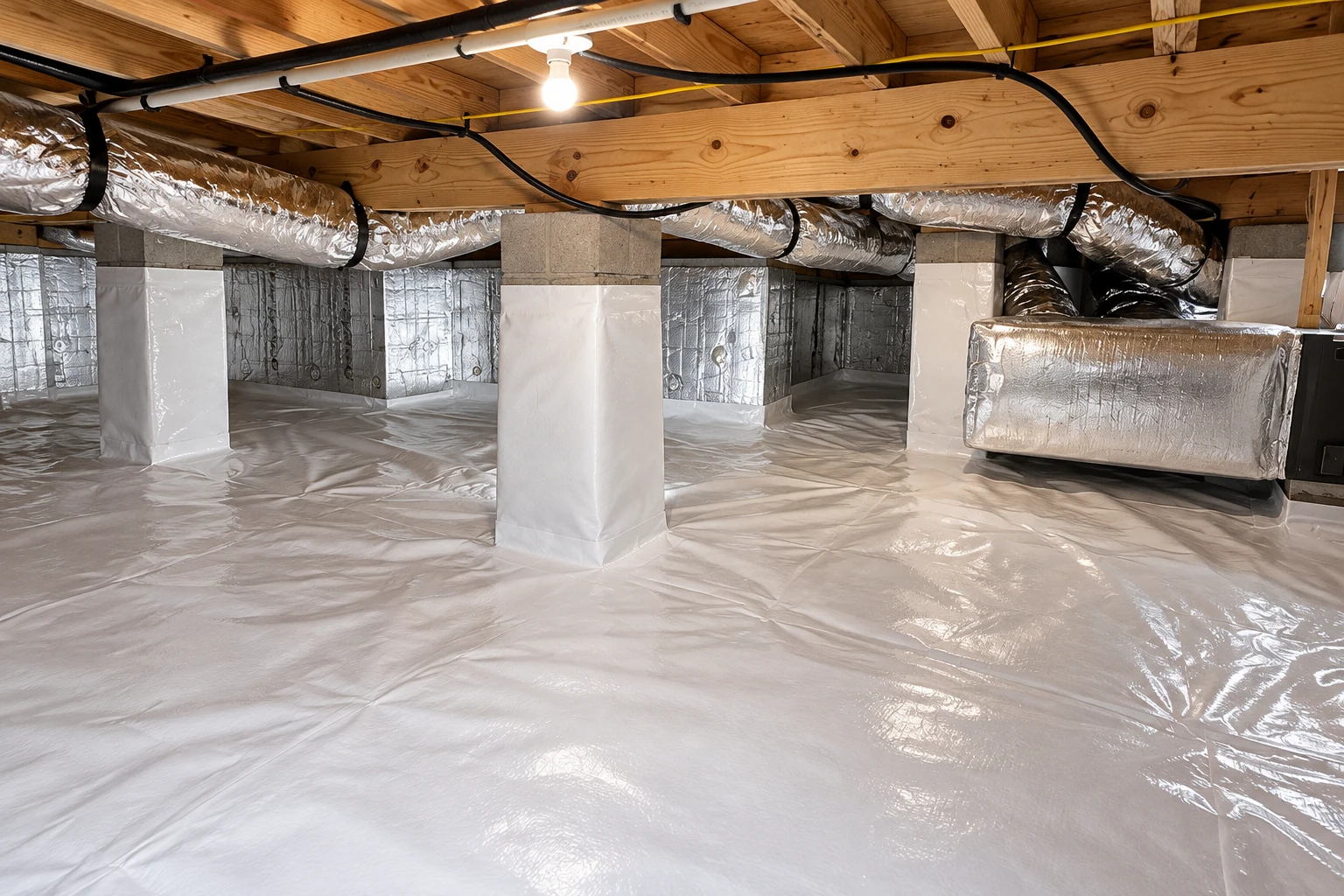
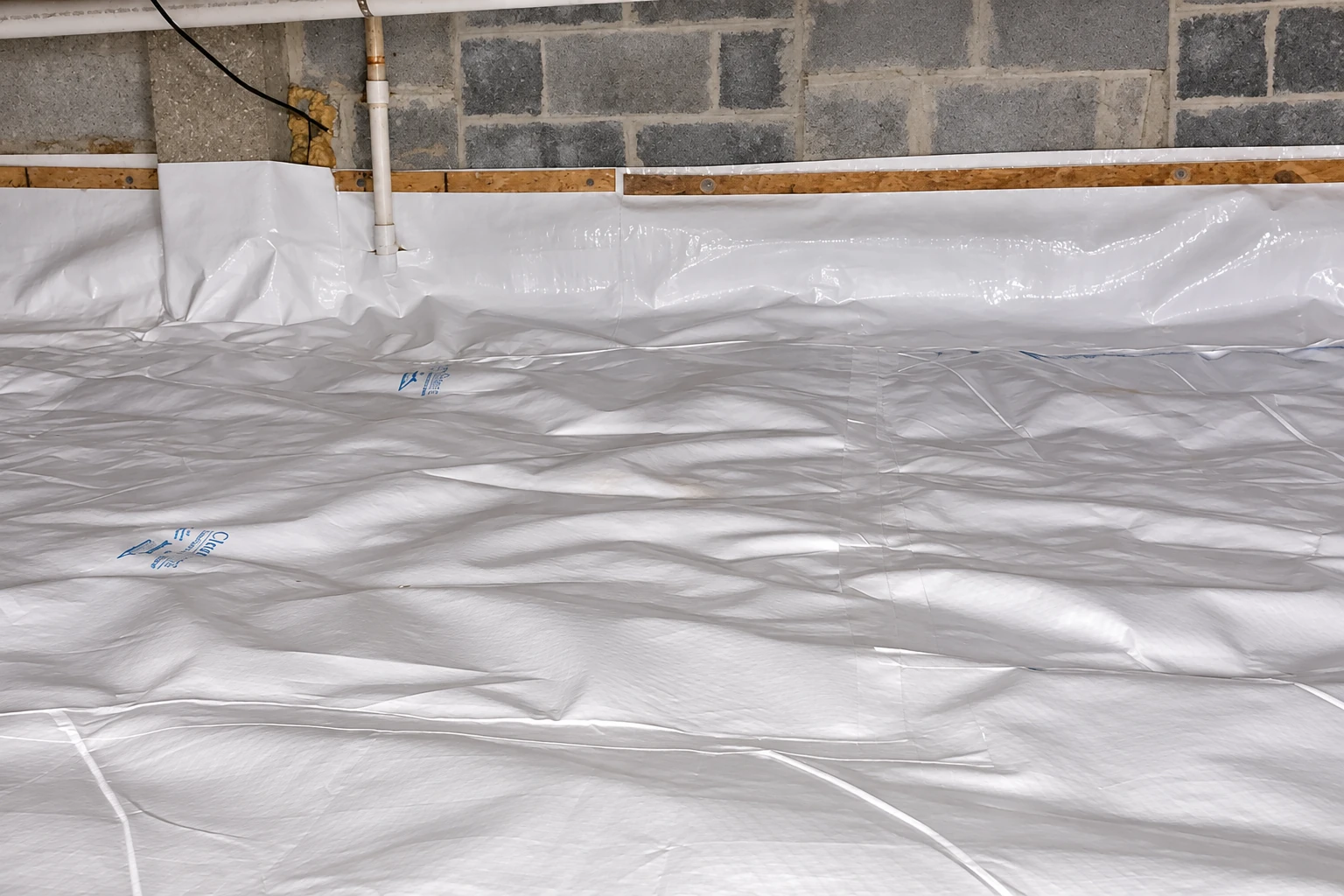
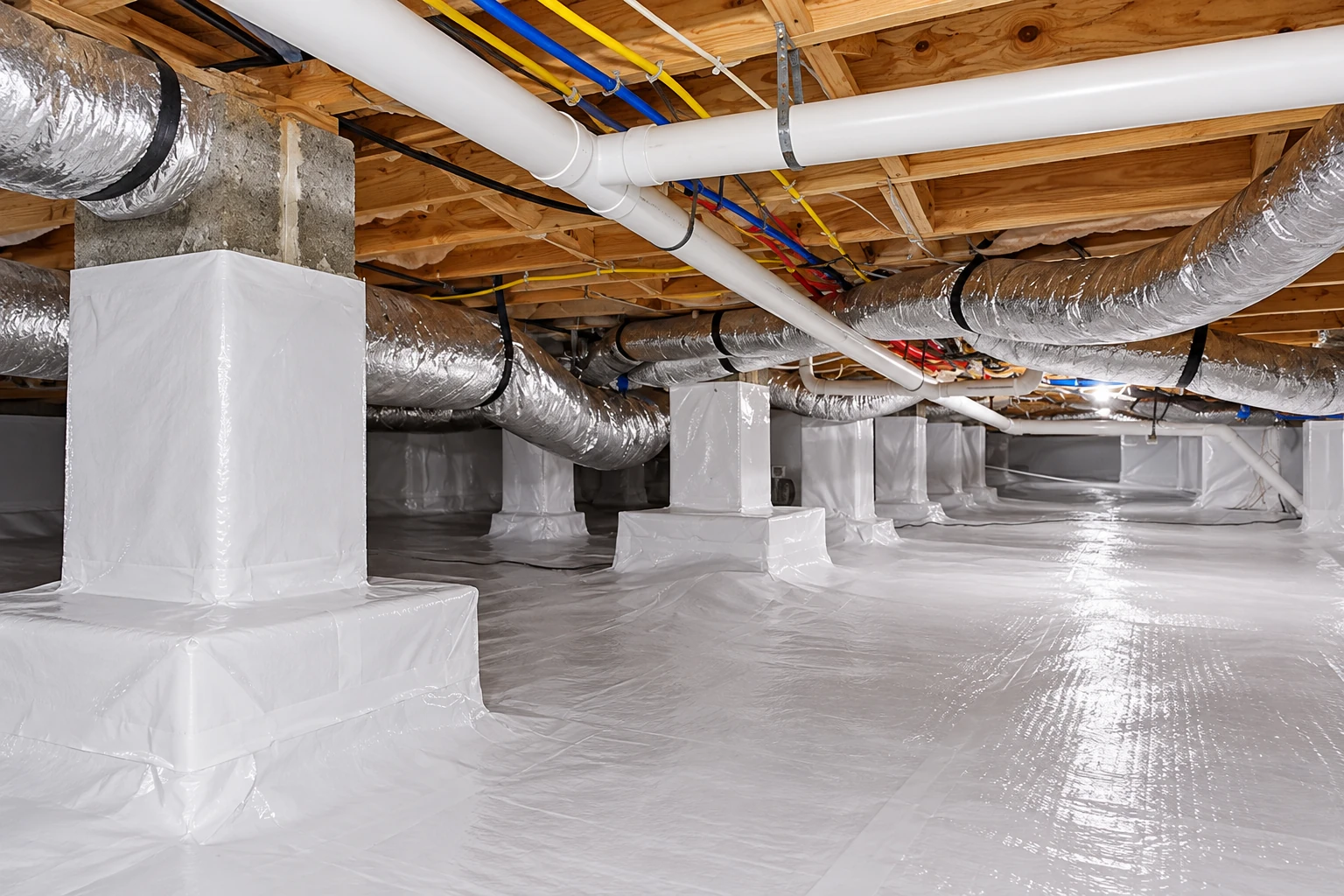
Moisture is the other half of a lot of commercial jobs. When an office or shop sits over a raised floor, we put down a crawl space vapor barrier so ground moisture stays out of the framing, and we handle vapor barrier installation in walls and ceilings that need their own layer beyond the insulation's facing.
Fiberglass systems for metal buildings
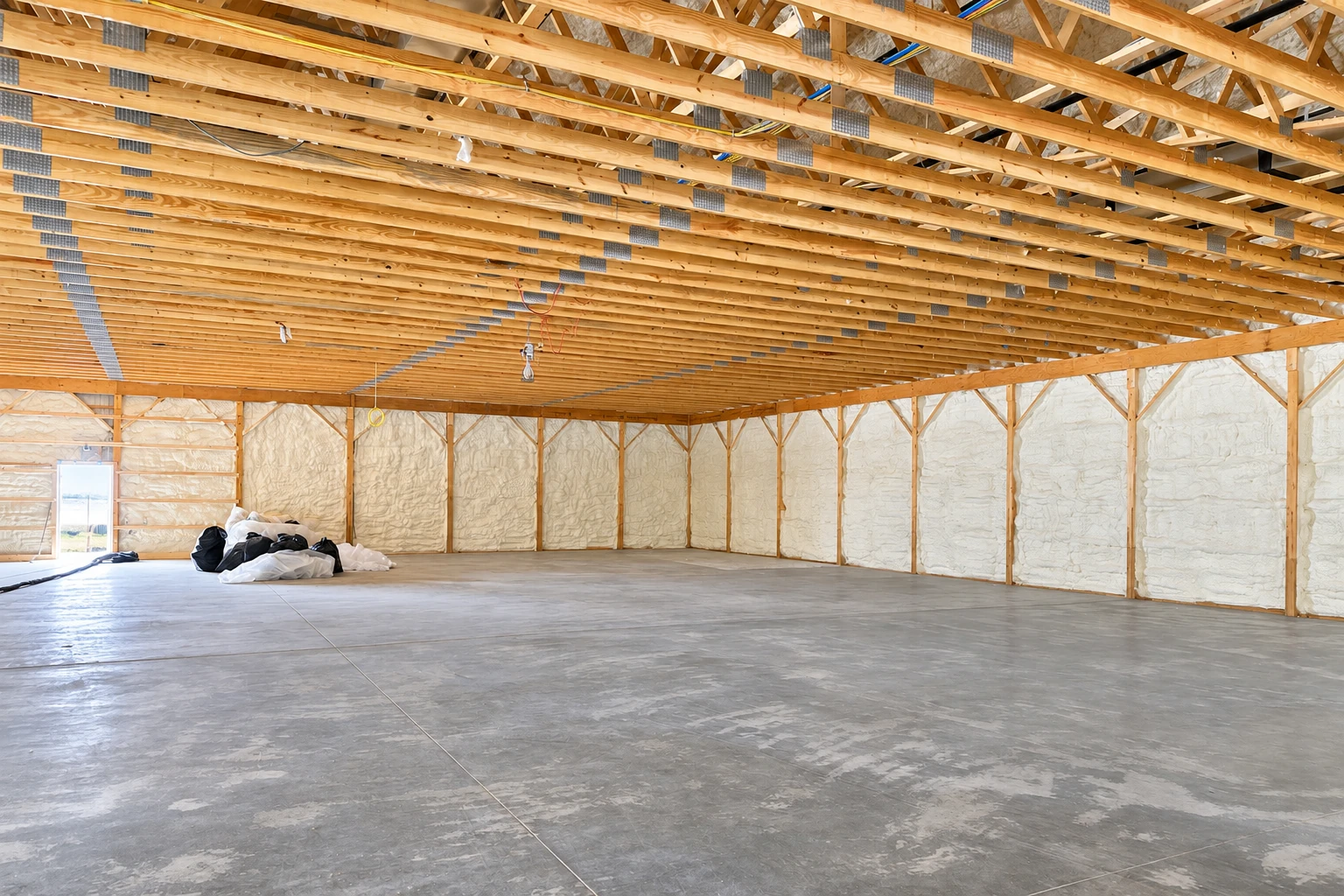
Most metal shops and warehouses suit fiberglass that fills the space between the roof framing, held up by straps or a fabric liner, and one trade association says these filled-cavity systems are quickly becoming a necessity to meet stricter energy codes. Fiberglass also keeps outside noise out and soaks up the echo inside, which you notice right away on a shop floor.
An added layer during a re-roof
If the roof is coming off anyway, fiberglass can go in as an added layer under a new metal roof or with the built-up and single-ply roofs most commercial buildings have. It's usually the easiest time to add insulation, because the roof is already open and nobody has to work under a finished deck.
Spray foam where gaps are hard to close
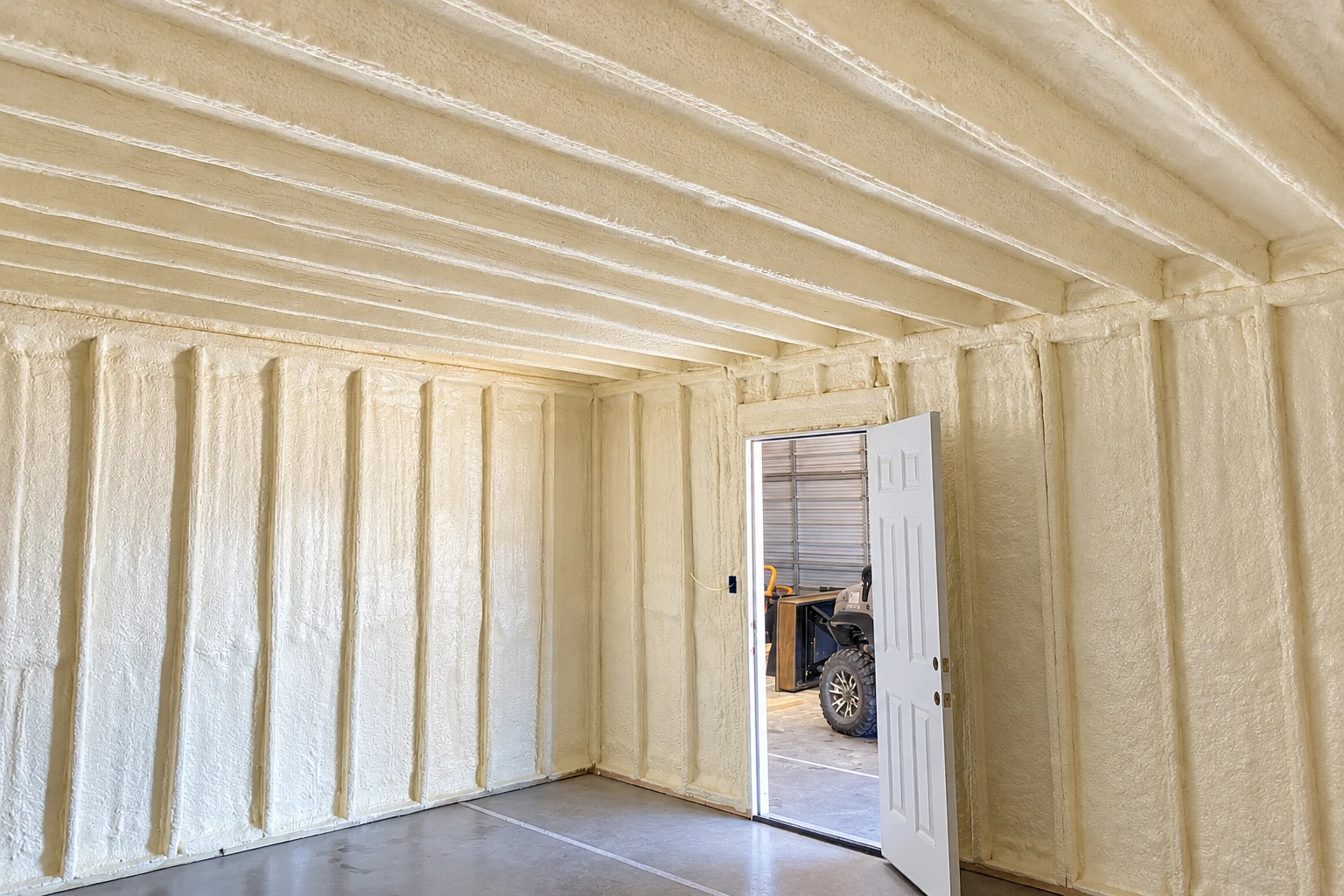
Foam costs more than fiberglass, but it seals air while it insulates, so it suits odd framing, add-on offices and spots where leaks can't be closed any other way. I'll tell you plainly when fiberglass will do the job for less.
Commercial insulation permits and codes in Yuma
Before a roof or wall project gets planned, I find out whether your address falls under the City of Yuma, Yuma County or another city, because that decides whose rules and inspectors apply. Inside city limits, the city's Building Safety Division issues building permits, reviews plans and inspects the work, and new permit applications there fall under the city's current building codes. Outside city limits, the county's Development Services office publishes its own changes to the building code. Whether insulation on your building needs a permit is a question for the office that covers your address, so we ask it, and when a permit is needed we handle the paperwork and line up the inspections.
We're based in Yuma and work in Fortuna Foothills, Somerton, San Luis and other cities around Yuma County, and the commercial calls look a lot alike: metal shops, ag and storage buildings, and offices under flat built-up or single-ply roofs. We see the same mix on jobs in Somerton and San Luis, so the order holds there too, with the roof checked first and insulation second.
Why Yuma business owners call K&L Yuma Insulation Company
The owner walks every building
I come out myself to look at your building, whether it's in Yuma or out in the county, and I write the estimate, then my crew and I do the install. You hear what I found from the person who'll be up there doing the work.
Running our own jobs since 2017
I learned this trade on insulation crews in summer attics and started this business in 2017 after years of doing the work for someone else. Those years taught me that the order of the work matters as much as the material.
Fully licensed and insured
We're fully licensed and insured. On a building where your staff and customers come and go, that coverage protects you while our crew is on site.
If you have a re-roof or a new building on the calendar, call (928) 248-2654 or request an estimate and I'll come take a look.
Request a quoteGet a written insulation plan for your commercial building
We respond within 1 business day to set a time, and the estimate is free, done at your building, with no pressure and no obligation. After you send the form, I come out myself, look over the roof and walls, and put what I find in writing.
What happens after you call about commercial insulation in Yuma?
Call or send the form
I set up a time to come out and look at the roof, walls and anything underneath them myself. Let us know your business hours so the visit stays out of your staff's way.
Walk the building, get it in writing
I check for leaks, wet insulation and anything else that should be fixed before we start. Your written estimate spells out what we'll seal, what we'll install and what has to happen first, so you can see what the price covers before you decide.
Install, walk-through and cleanup
My crew and I do the work, and if we open up something the estimate couldn't show, I stop and show you before we go on. At the end I walk the job with you, and we clean up before we leave.
Frequently asked questions
Is a cool roof enough without insulation on a building in Yuma?
No. A cool roof cuts the heat the sun puts into the roof, but federal energy guidance says it's no substitute for enough insulation. Insulation slows heat moving in and out through the roof in ways a reflective surface can't, so the two work together.
How do I compare R-values between commercial insulation bids?
Compare how each bid builds the finished roof or wall, because an industry standard for metal building insulation says the R-value on the label, the number for how well insulation slows heat, covers the insulation alone. It leaves out the facing, the spots where insulation gets squeezed at the framing and the heat that travels through metal fasteners. Ask each contractor how they handle those three.
How do I know if spray foam in my building needs a covering?
Usually it does, because model building codes require spray foam to be covered by a thermal or ignition barrier, a layer that shields it from fire, unless it passes large-scale fire tests. Foam on the outside of a building, such as in a roof system or an exterior wall, falls under different requirements, so where the foam goes decides what the job has to include.
What causes condensation to drip inside a metal building?
Damp inside air reaching cold steel is what makes a metal roof drip, and insulation only keeps that off the inside surfaces when it's properly installed with a vapor retarder. A torn facing or an open seam lets that air through, so we treat the vapor retarder as part of the job, not an extra.
How much does commercial insulation cost in Yuma?
The price for your building comes in the written estimate after I walk it, because roof size, roof type and what's already up there change it more than anything else. Insulating during a re-roof usually costs less than working under a finished roof, fiberglass usually costs less than spray foam, and wet or damaged insulation that has to come out first adds to the total.
What does the C-40 insulation license cover in Arizona?
Arizona's C-40 Insulation classification lets a contractor install and repair insulation, including radiant barriers, and the materials that protect insulation. Ask any contractor bidding on your building which license they hold before work starts.
Other moisture work for commercial buildings
Crawl space vapor barrier
When an office or shop sits on a raised floor, a barrier on the ground keeps damp air from rising into the framing above it.
Vapor barrier installation
For walls and ceilings that need their own moisture layer beyond what the insulation's facing gives them.
Yuma, AZ
Book a walk-through of your building
Call K&L Yuma Insulation Company at (928) 248-2654 or email quotes@yumainsulationcompany.com with your address, building type and roof type, whether metal, built-up or single-ply, so I show up knowing what to look for.